
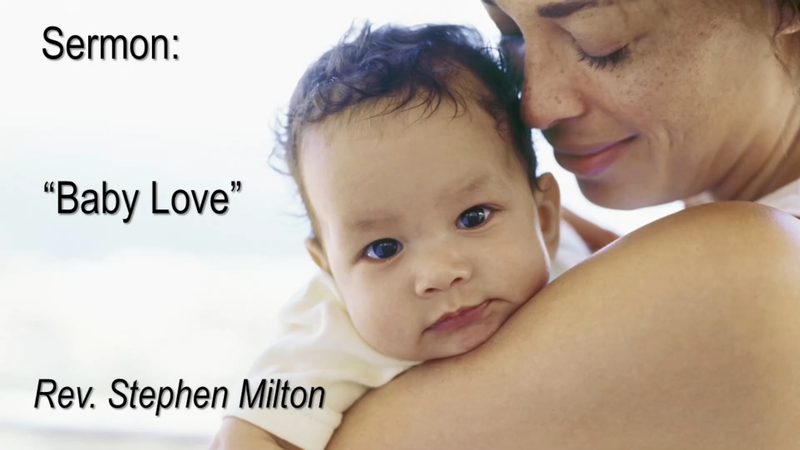
“Baby Love”
Rev. Stephen Milton
August 23 2026
Exodus 1:8- 2:10.
Today’s scripture is the start of a famous story, the life of Moses, the man who will lead the Israelites out of slavery into freedom. But, this story actually begins with the actions of women fighting against the will of one man, the Pharaoh, the leader of Egypt. Pharaohs build pyramids, they are considered nearly gods. No one in their right mind would say no to a Pharaoh. But that’s what happens in this story, and it is worth exploring why these women say no, and why God supports them.
The Pharaoh has a problem. There are too many Israelites. They are breeding too quickly, and he fears they soon outnumber Egyptians. This sounds like the great replacement theory, but Egyptian style. Pharaoh fears the enslaved Israelites may rise up against the Egyptians. The Pharaoh does not consider freeing them or making their life better so they can be allies and loyal to the Pharaoh. Instead, he order his people to enslave the Israelites, to make their lives worse, not better. They are forced to create new cities and public works under the lash. It does not occur to the Pharaoh that this will cause them to resent the Pharaoh.
And he does not anticipate that all this hard labour will lead to more Israelite women going into labour to have even more babies. Despite trying to work them to death, they respond with more life.
So, the Pharaoh gets desperate. He decides to kill all their newborn baby boys so the Jews will slowly die out. We have word for this kind of strategy: it’s genocide.
Fortunately, the two midwives he tells to start this slaughter are God fearing women. We don’t know if they are Jews, but they probably are since they are named Shiphrah and Puah. Their names matter because their actions will save God’s chosen people from genocide. They know that God will not approve of the Pharoah’s plan to kill God’s chosen people, one baby at a time.
So they lie. They claim that the Jewish women are so sturdy, as vigorous as animals, so they give birth on their own before the midwives can arrive. They play to the Pharaoh’s racism - he considers the jews less than human, so maybe he will fall for this lie. Many a genocide has begun with leaders who denied the humanity of their victims. The Nazis compared Jews to rats; In Rwanda, victims of the genocide were called cockroaches. The midwives hope that their lie will stop the Pharaoh, taking advantage of his racism. And God rewards them for their lie. We are told that God grants the midwives families of their own, the greatest gift women of this time could receive.
But to us, this part of the story is problematic. How could God congratulate them for lying? Isn’t one of God’s ten commandments, do not lie? Moses will bring those commandments down from the mountain top. How could God approve of the midwives lying?
This entire story is a meditation on the nature of oppressive power. The Pharaoh lacks any kind of conscience. Keeping power is his only concern. He would rather kill babies than consider the welfare of his subjects. He chooses death over life, a choice often found in authoritarian leaders, then and now. They wield power not for the common good, but for their own good. They kill their enemies, even babies. In the Bible’s eyes, they glory in death, not life.
And that makes them enemies of how God created the world and God wants human society to work. As Jesus says later on, God is a God of the living, not the dead ( Mark 12:27). So, in the eyes of the Bible, the Pharaoh’s rule is itself a lie. It is an empire built on death, not life. An affront to what is good and true in God’s creation. And for that reason, the midwives are allowed to lie in the service of life. In this instance, the Pharaoh doesn’t deserve the truth since he has embraced a lie and death as his power.
Once again, the Pharaoh’s death-dealing plan has backfired. The Israelite women are still giving birth, the population is still increasing.
So, he gives another deathly order: all baby boys born among the Israelites should be thrown into the river Nile to die. Imagine what that would have looked like. How horrendous, how evil. The Nile was a source of life- giving floods to the Egyptians, the key to their remarkable agriculture. Yet here was the Pharaoh turning it into a river of death.
But not all women obeyed. We are told that a mother, born of the tribe of Levi, gave birth to a baby boy. Did she sense he would be special? Or did she simply feel as all mothers do that he was precious, so she would do everything she could to save him? She hides him for three months. But perhaps his cries have become too hard to keep quiet. So she decides to try to save him. She places him a basket that can float down the river, perhaps to a better life somewhere else. It is a plan no doubt hatched with many prayers. A plan based on a faith in life in the face of deathly powers. She breaks Pharaoh’s law and lies, in the service of life.
The baby Moses is launched into the water in the basket. Here we encounter thick symbolism. In the Bible, water is seen in two ways. It can be a source of life, like the Nile. God is often compared to life-giving water, a natural image for a desert people. But there is another way of seeing water in the Bible.
It has an association with death and chaos. On the first day of creation, God’s spirit goes over the face of the deep waters to bring creation out of dark chaos.
Later, Noah builds an ark for his family and pairs of animals to save them from the deadly chaos of the flood waters that cover the Earth.
In Christianity, baptisms started out in water deep enough to drown in. We symbolically emerge out of the chaos of our old sinful lives to join God in a life led by the spirit. Jesus gathers his disciples telling them they will be fishers of men, that is, they will draw people out of the chaos and evil of life, symbolized by water.
So, in today’s story, that baby boy is placed in a basket and floated down a river. His basket may float past the bloated corpses of other baby boys, a river of death and chaos.
In the original Hebrew, the word for “basket" is the same as the word for “ark.”
So Moses is placed in an ark, just like Noah and the animals were in an ark. Both are boats that rescue the living from chaos and death. The flood in Noah’s case, and the deadly orders of the Pharaoh in the Moses story.
The ark carrying Moses is found by the women of the Egyptian court. The Pharaoh’s daughter retrieves the basket and falls in love with the baby boy. She names him “Moses”, which means one drawn out of the water. Out of the deadly water.
This episode sets the scene for all that Moses will do later. He will be a kind of Noah for his people, the one who will save them from the deadly power of Pharaoh. But please note, that although the Pharaoh is all powerful, it is women who defy him. First the unnamed mothers of the Jewish people who keep having babies even though they were forced to be slaves. Then, the midwives Shiphrah and Puah who refuse to kill the baby boys. Then the mother of Moses, Jochebed, who refuses to drown him in the Nile. And, perhaps most surprisingly, even the Pharaoh’s daughter defies the Pharoah by adopting Moses. It’s women all the way, standing up for life while the Pharaoh orders genocidal death.
And God is completely on the side of these women. Even when they lie. Even when they break the law of the land by denying Pharaoh his deadly wish. In this story, God is the God of women in childbirth. Not a warrior God, but a god of midwives and women in labour. Life against death, and God chooses life.
In our time, there are many pharaohs. Many male leaders and governments who wish they could wipe out their enemies completely, through acts of genocide. They rely on armies and drones to carry out their will. They tell the world that the death of civilians is a necessary price to pay to defeat their enemies. Russia’s Vladimir Putin doesn’t even pretend to be waging a war against soldiers anymore. His forces just aim their drones at apartment buildings full of innocent Ukrainians. In China, the Uyghurs [ Wee-goors] are in danger of having their culture wiped out by their forced “re-education” in detention camps. And in Israel, the war against Hamas was used to justify the death of tens of thousands of civilians. On the other side, the leaders of Hamas have argued that they don’t mind if their own civilians die as long as the Palestinian cause is advanced. All over the world, leaders consider civilians expendable, to keep power for themselves at all costs. They rule through the power of death, like the Pharaoh.
But, often, it is women who see through this madness. They have given birth to the men and women who are the victims and soldiers of the Pharaohs of the world.
It was mothers in Argentina who protested the disappearance of their sons and daughters by the authoritarian government in the 1970s. They gathered in public squares each day to walk in circles reminding everyone of a pain that would not go away. This undermined the government’s power in a way no bullets ever could.
Today, in Israel and Palestine, many women are at the forefront of the peace movement, on both sides of the conflict. It is estimated that in Israel/Palestine there are now over 200 peace groups working on both sides of the border. This doesn’t get mentioned much in our press. Blown up buildings make for better news clips than filming groups of people meeting quietly in the basements of synagogues and mosques.
One of those groups is called Women Wage Peace.
Two months ago, Roberta and I met with one of their leaders in Israel, Peta Pellach. She told us that although there are many, many peace groups in Israel and Palestine, many of them are led by women.
In Israel, the Women Wage Peace group has 50,000 members, with supporting chapters around the world, including in Toronto. They have partnered with a sister group of Muslim women in Gaza called Women of the Sun. The two groups meet in person when they can, which is difficult. They talk about ways to pressure their governments on both sides of the border to see that stacking more dead bodies will do nothing for the health and security of either side. Peace is the only way forward, and violence just postpones the only viable alternative.
Real power comes from a love of life, not making excuses for death. That’s why God sided with the midwives and the women against the Pharaoh. Because they saved Moses, he was able to work with God to save an entire people from slavery in Egypt. But none of that could have happened if the women had not defied Pharaoh first.
God still calls us to choose life over death. We are called to speak out when leaders claim the death of others is necessary. We are called to demand that our leaders choose the powers of life and reject the cynicism of the Pharaohs of the world. And we can expect to have God on our side - as the midwives discovered. When they sided with life, they were given life. Life begets life. That’s how God does it, and invites us to join this sacred way of life. Amen.

%20(4).png)